The Menstruation Research Conference 2026 is a collaborative initiative between the Menstruation Research Network (MRN) and the Menarche, Menstruation, Menopause and Mental Health (4M) Consortium. The conference is being organised with the support of the following committee members and staff, whose contributions are helping shape the planning and delivery of this year’s event.
Dr Chi Eziefula
Associate Professor in Global Health and Infection at Brighton and Sussex Medical School

Chi Eziefula is an Associate Professor in Global Health and Infection at Brighton and Sussex Medical School, a Consultant in Infectious Diseases at University Hospitals Sussex, a Fellow of the Sussex Sustainability Research Programme and Advisor to the Centre for Cultures of Reproduction, Technologies and Health (CORTH) at the University of Sussex, UK. Her work in Menstrual Health explores the intersection of menstrual health, human rights and environmental sustainability. She supports conversation and learning on the topic of menstrual health across Schools at the University of Sussex and publicly; giving talks and holding workshops. Her current work explores how to represent young menstruators’ needs through citizen science. She is part of the Period Dignity Project at Sussex, supporting access to menstrual products and developing the approach to menstrual health policy.
Prof Gemma Sharp
Professor of Epidemiology at the University of Exeter

Gemma Sharp is a Professor of Epidemiology at the University of Exeter where she runs a research programme around women’s reproductive and mental health. She has a background in reproductive biology and much of her previous research focuses on epigenetics as a mediator of the social and environmental influences on health. Gemma is founder and director of the Menarche Menstruation Menopause and Mental Health (4M) Consortium, a global network of over 500 academic and non-academic members working at the intersection of menstrual and mental health. She is leading the MenstruLife project, which explores the prevalence of heavy and painful menstrual periods across the life course and their relationship with depressive symptoms. She is also leading the Cycletrack project, which is a groundbreaking new study to develop world-leading data resource for menstrual health research. Gemma lives in Cornwall and spends her spare time exploring the south west coast path.
Dr Sampurna Kundu
Postdoctoral Research Fellow in Epidemiology at the University of Exeter

Sampurna Kundu is a Postdoctoral Research Fellow in Epidemiology at the University of Exeter, working on the MenstruLife project with Prof Gemma Sharp. Trained in biostatistics, epidemiology, and demography, her research focuses on menstrual and mental health across the life course using large population cohort data. Her doctoral research examined premature menopause and women’s midlife health, with a particular focus on health inequalities and women’s lived experiences. Her broader research interests include menstrual health, menopause, reproductive ageing, and their intersections with mental health and social determinants of health. She co-edited the Springer SDG volume Paradigm Shifts in Population and Health in India: A Multidimensional Approach to SDGs. Sampurna is also a member of the Menarche, Menstruation, Menopause and Mental Health (4M) Consortium and contributes to coordinating consortium activities. Originally from India, where she completed her education, she later moved to Exeter for postdoctoral research and enjoys travelling and exploring new places.
Dr Gemma Sawyer
Postdoctoral Research Fellow in Epidemiology at the University of Exeter

Gemma Sawyer is a postdoctoral research fellow in Epidemiology at the University of Exeter working on the MenstruLife project with Prof Gemma Sharp examining the relationships between menstrual pain, heavy menstrual bleeding, and depressive symptoms over the lifecourse.
She completed her PhD at the University of Bristol investigating the associations between poverty, childhood adversity, and menstrual symptoms, as well as the consequences of adolescent menstrual symptoms on educational attendance and attainment. She continued this work to develop a policy briefing with recommendations for school-based interventions to improve menstrual wellbeing through collaboration with students, teachers, menstrual health organisations, and council/government officials. Gemma also has a background in Psychology and Public Health and is passionate about reducing menstrual inequalities.
Alice Brooks
Research Assistant at the University of Exeter
Alice Brooks is a Research Assistant at the University of Exeter on the Wellcome Leap–funded CycleTrack: Understanding Menstrual Health project with Professor Gemma Sharp. This work explores menstrual health and heavy menstrual bleeding using cohort data, surveys, wearables, and menstrual fluid samples. In this role, Alice collaborates with community organisations and PPIE groups to ensure research and impact is rooted in lived experience. Alice holds an MSc in Women’s Health from University College London, where she researched menstrual experiences in English schools, exploring menstrual education and support as well as its impacts on physical, emotional and social wellbeing. She has collaborated with partners including Wellbeing of Women to improve menstrual education and policy in the UK, and has done a lot of work publicly on women’s health and gender equity in healthcare. Alice is passionate about menstrual justice, global women’s health, and decolonising research, using evidence to drive meaningful change in healthcare, policy, and education. She aims to pursue a global health career focused on menstrual and reproductive health in East Africa, promoting participatory, feminist approaches that challenge inequality and centre community voices.
Dr Deepthi Lavu
Academic General Practitioner at Doctoral Fellow at the University of Exeter
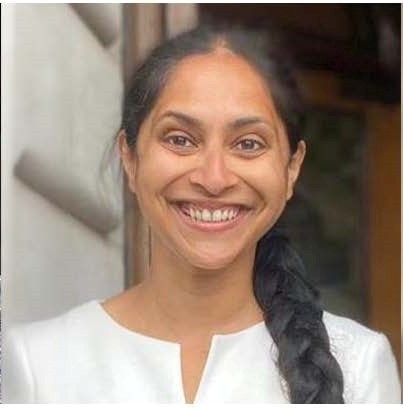
Dr Deepthi Lavu is an academic general practitioner based in Devon and is currently undertaking her doctoral fellowship at the University of Exeter. She previously trained in Obstetrics and Gynaecology and actively collaborates in Women’s health research. She is a part of the Women’s Health Research Group at the University of Exeter in addition to being a member of the Exeter Collaboration for Academic Primary Care (APEx). She is the co-inventor of the smartphone app PreMentricS which was developed as a clinician’s aid to diagnose premenstrual disorders. Deepthi is a member of the Royal College of General Practitioners’ Women’s health special interest groups where she contributes to raising awareness on various topics. Deepthi lives in Devon and spends her time ferrying her children to various activities around the South West.
Dr Panagiota Pagoni
Postdoctoral Research Fellow in Molecular Epidemiology at the University of Exeter

Panagiota Pagoni is a Postdoctoral Research Fellow in Molecular Epidemiology at the University of Exeter, working with Prof. Gemma Sharp on the Cycletrack project. She has a background in statistics and genetic epidemiology and previously worked in psychiatric genetics, contributing to research on a range of complex conditions including ADHD, Autism spectrum disorder, Schizophrenia and Alzheimer’s disease. Panagiota also served as a data intake representative for the Psychiatric Genomics Consortium (PGC) Schizophrenia working group, collaborating closely with clinicians and epidemiologists around the world. Panagiota is passionate about using genetic and epidemiological methods to address questions that matter for women’s health and mental health and wellbeing.
Dr Sophie Collins

Dr Sophie Collins completed her PhD at the Institute of Development Studies (IDS) at the University of Sussex, UK. Her research focused on the power, framing, and depoliticisation of menstrual health policies and programmes, specifically focusing on the Kenyan MHM Policy and Strategy 2019-2030. Her qualitative research drew on ethnographic research methods and included interviews and workshops with several key stakeholders involved in menstrual health policy and programmes in Kenya and globally. Sophie works as an international development consultant working in the field of health and life sciences. She is currently leading a pan-African evaluation of the implementation of comprehensive sexuality education (CSE) programmes in schools, and assessing the extent to which governments are progressing policy changes to further enhance CSE in national curriculums.
Dr Tigist Grieve
Lecturer at the University of Bristol

Dr Tigist Grieve is a Lecturer in Social Policy at the University of Bristol and Programme Director for the International Social and Public Policy programme in the School for Policy Studies. With a background in Global Development, her research focuses on social inequalities and social reproduction, with particular emphasis on adolescent girls’ education, reproductive health knowledge, welfare and wellbeing in Africa. Her work spans several countries, including Burkina Faso, Ethiopia, Sierra Leone, Somalia and Uganda.
Tigist identifies as a pracademic, bridging research, policy and practice. She is the founder of the Bristol-based charity For-Ethiopia and works closely with non-academic partners to ensure that research evidence informs practical interventions and meaningful social impact. She recently served as Principal Investigator on a multi-country study on adolescent girls’ wellbeing, ‘Unheard Voices of Girls in Africa’, and Gender Sensitive pedagogies with the findings informing interventions on menstrual health knowledge, dignity and wellbeing. She is committed to equitable South–North research partnerships and genuine participatory approaches that centre community voices in developing culturally relevant policies and interventions.
Emily Budden
Doctoral Researcher at Brighton & Sussex Medical School

Emily is a Doctoral Researcher based in the Department of Clinical Neuroscience at Brighton and Sussex Medical School. Her PhD investigates whether menopause and Menopause Hormone Therapy interact with genetic risk for Alzheimer’s Disease to influence women’s midlife cognitive health.
Emily is passionate about women’s health and understanding how to promote wellbeing and healthy cognitive ageing throughout the lifespan. She is also part of the Sussex Women’s Health Research group at Brighton & Sussex Medical School.
Aside from her PhD, Emily has an interest in science communication and public engagement. She has hosted events in the local community, such as “Menopause, Brain Health and Wellbeing…An Evening with the Experts”, and written blogs for Women in Neuroscience.
Emily has a background in Psychology, completing her BSc and MSc at the University of Sussex. Before starting her PhD, Emily worked as a Clinical Research Coordinator and a Research Assistant at Sussex Partnership NHS Foundation Trust.
 Menstruation Research Conference